
The demand for skilled commercial drivers in Canada is growing day by day and isn’t going to slow anytime soon. In fact, according to Transport Canada reports, the country may face a shortage of 30,000 skilled commercial drivers by 2028. Making it one of the most stable and accessible career paths in Canada for newcomers, a commercial truck driving career in Canada can be a great option.
If you’re someone who is actively planning to enter this space by 2026, then getting your Class 1 MELT training certification in BC should be your first step. But the process sometimes is not as smooth as you think, especially when you are starting from scratch.
This guide is for people who are looking to start or switch a career in commercial driving in Canada in 2026; it has just what you need to do, when to do it, and how to avoid the common mistakes people make.
What Is A Class 1 License In BC?
A Class 1 license training program in Canada is a mandatory entry-level test to qualify you to operate tractor-trailers (semi-trucks) across British Columbia and Canada. It’s generally considered the highest level of commercial driving license, and it also gives you the opportunity to drive long-haul, cross-border, and high-paying trucking roles.
But there is a change, and that is, in 2019, BC made Mandatory Entry-Level Training (MELT) compulsory for everyone. That means you are no longer required to just pass a test anymore; you need structured, certified training.
What Is MELT And Why It Matters
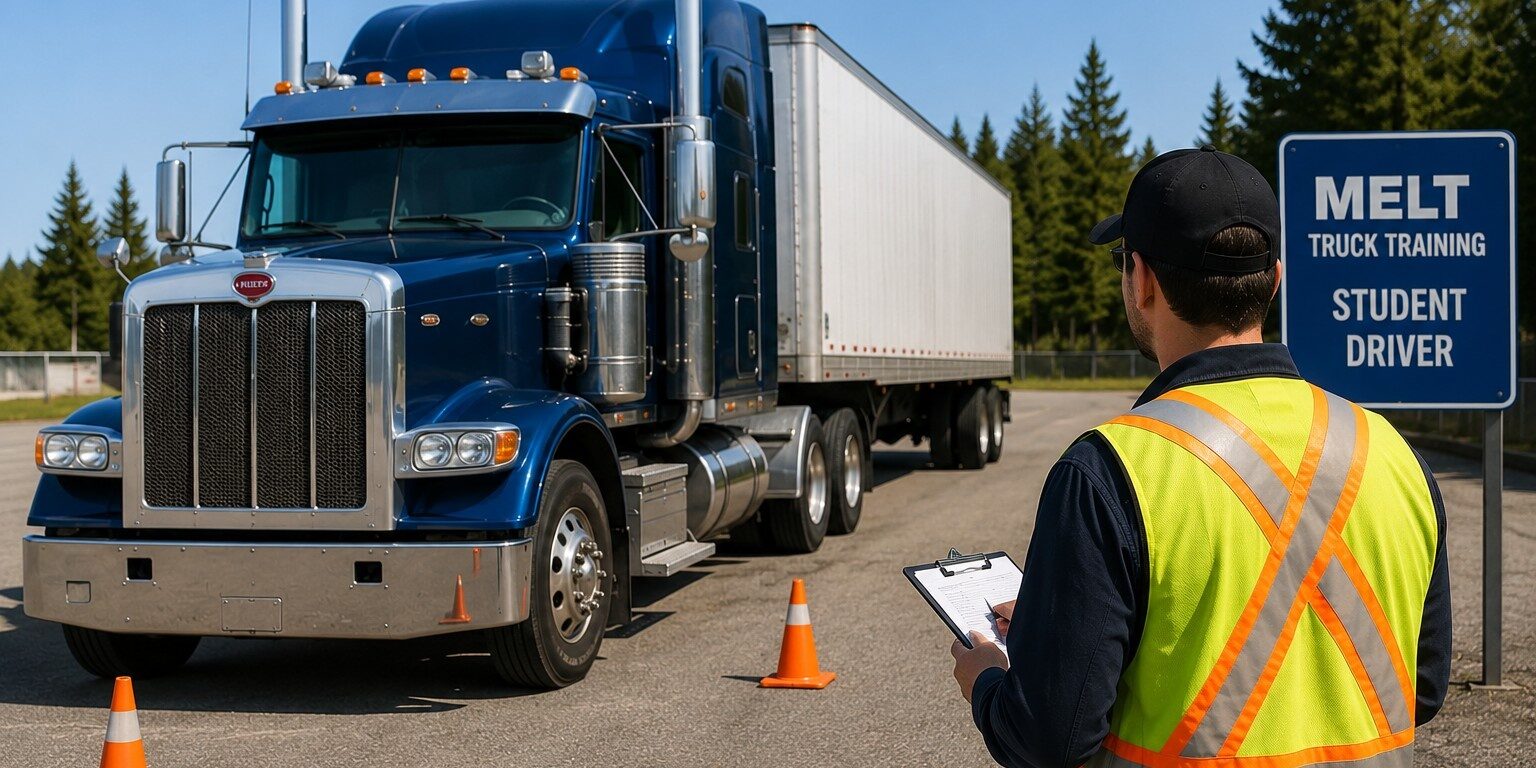
Class 1 MELT training in British Columbia is a government-approved program that is designed for upcoming commercial drivers so that every new truck driver meets minimum safety standards and specific skill training.
What MELT Includes:
- Classroom theory about rules, safety, and compliance
- In-yard trainings and inspection
- On-road driving in real traffic
In BC, MELT typically includes the following:
- 140+ hours of training
- Certified instructors
- Standardized curriculum that is approved by ICBC
And if you want a deeper breakdown, you can explore this, MELT Program in BC Explained: Everything You Need To Know.
Step-by-Step Process To Get Your Class 1 License In BC
Let’s simplify the entire journey into clear and actionable steps:
Step 1: You Have To Meet Basic Eligibility
Before enrolling, you have to meet some basic eligibility criteria, which are:
- Be at least 19 years old
- Hold a valid Class 5 license
- Pass a medical exam for commercial driver fitness
- Have a clean or acceptable driving record
Tip: A lot of candidates are delayed here due to incomplete medical forms; you must get this done early.
Step 2: Pass The Knowledge Test
You will be required to clear the ICBC Class 1 knowledge test, which includes:
- Road signs and rules
- Air brake systems
- Commercial driving laws
Most truck driver training programs in Canada will help you prepare for this with mock tests and study material.
Step 3: Enroll In A Certified MELT Program
This is for every candidate; you will make the most important decision here. Not all driving schools will deliver the same quality of training even if their curriculum is same.
You must look for:
- Real driving hours in your training program
- Small batch sizes
- Job placement support
- Industry-experienced instructors
If you want to build a career in commercial driving, then you should explore the Class 1 MELT training program at Extreme Pro College, where structured learning meets real-world driving exposure, something many entry-level programs lack.
Step 4: Complete Your Training Hours
Your Class 1 license training will include the following:
| Training Component | What You Learn |
| Classroom | Safety, compliance, trip planning |
| Yard Training | Parking, coupling, inspections |
| On-Road Driving | Highway driving, city routes, real traffic |
According to the reports suggested by Canadian Trucking Alliance, drivers that are certified with a structured MELT training certificate are significantly less likely to be involved in road accidents.
Step 5: Pass the Road Test
Now once your training is complete, you shall book your ICBC road test, where you are evaluated on:
- Pre-trip inspection test
- Basic controls
- Road awareness
- Defensive driving
Here you are really showing the quality of your training.
Step 6: Start Your Trucking Career
After passing your test, you’re officially a Class 1 licensed driver.
Entry-level roles include:
- Long-haul driver
- Regional driver
- Freight transport driver
According to Job Bank Canada, entry-level truck drivers in BC earn around CAD 50,000–70,000 annually, with experienced and senior drivers crossing CAD 80,000+. Though it still depends on the route and company you are driving for.
Choosing The Right Truck Driving School In BC
Your decision will impact everything from how confident you feel when you are behind the wheel to how quickly you land a job.
Here’s a quick comparison:
| Factor | Basic Training School | Industry-Focused Training Program |
| Training Hours | Minimum required | Often extended/practical-heavy |
| Instructor Experience | Varies | Industry professionals |
| Job Support | Limited | Strong employer connections |
| Real Driving Exposure | Moderate | High |
| Career Readiness | Average | Job-ready |
Common Mistakes To Avoid
Even in 2026, many students who are choosing Class 1 MELT training in BC make a few common mistakes that can slow down their journey or impact their job readiness.
-
Choosing The Cheapest Program
When a student chooses low-cost driver training in Canada, it often cuts down real driving hours and instructor attention. In truck driving school in BC, this matters a lot since employers may lack confidence in you.
-
Ignoring Job Placement Support
Not all truck driver training programs in Canada can help you get a job. Schools with strong employer networks can significantly reduce your job search time after completing your Class 1 license training.
-
Rushing The Learning Process
MELT is designed for skill-building, which is a process, and it is not something that happens overnight. Drivers who learn slowly and follow the complete process during their Class 1 MELT training are more likely to pass the test.
Final Thoughts
Getting your class 1 license is just one step, but what truly sets you apart is the quality of your training, how confident you are behind the wheel, and how prepared you are for real-world driving conditions. The gap between being “licensed” and being “job-ready” is where most new drivers struggle and where the right training makes all the difference.
Start with a Class 1 MELT training BC program that actually prepares you for the job market. You can also talk to our counselors and explore a truck driving school that is designed to move you from training to employment with confidence.