

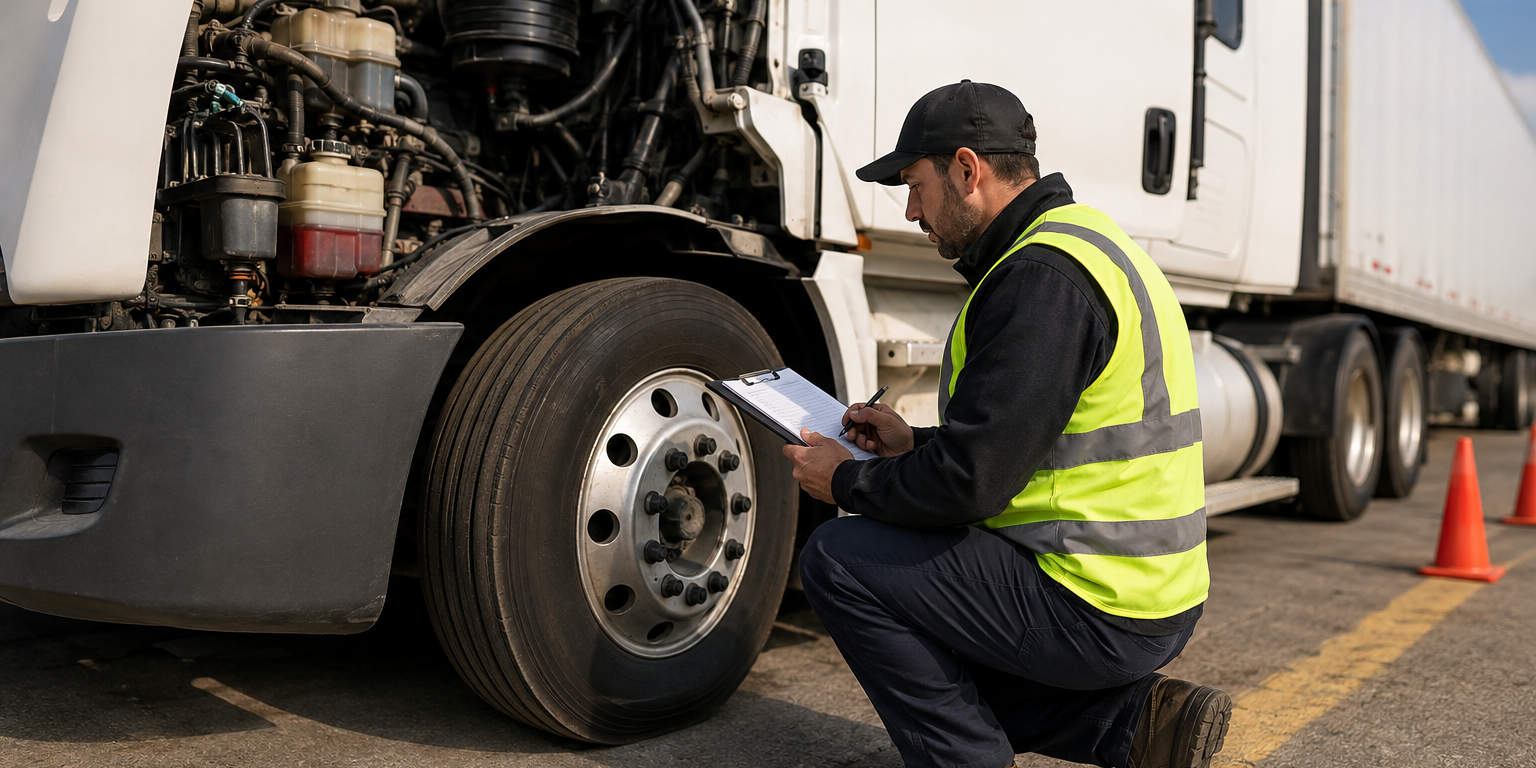
A commercial driving road test in British Columbia doesn’t begin when you turn the key. It begins when you walk toward the truck. A lot of truck drivers focus so much on shifting, backing, or parallel parking that they almost forget the biggest scoring area: the pre-trip inspection in the BC exam.
A pre-trip inspection isn’t just about learning the script; it’s about learning to think like a professional driver who knows how to spot problems before they become dangerous.
If you are preparing for Class 1 pre-trip inspection, this guide walks you through exactly what to check, what ICBC examiners expect, and the common mistakes.
Why Is a Pre-Trip Inspection Mandatory in BC?
You can think of commercial driving as a moving workplace. Every trip involves thousands of moving parts that carry significant weight over long distances. Even a small issue, such as low tire pressure and faulty brake lights, can quickly become a serious safety issue.
That’s why inspections are required under Canada’s National Safety Code and are part of commercial driver training and licensing in British Columbia.
For employers, insurance providers, and enforcement officers, a proper commercial truck inspection is simply a part of professional driving.
What Does an ICBC Examiner Look For?
During your inspection, the examiner is not only watching your performance. They’re watching whether your inspection follows a logical sequence or not.
You’ll typically be judged on:
| Inspection Area | What You’re Expected to Demonstrate |
| Tires & Wheels | Tire condition, pressure, tread depth, wheel security |
| Brakes | Air brake components, leaks, adjustments, and warning systems |
| Lights | Headlights, brake lights, turn signals, clearance lights |
| Steering | Steering linkage, power steering leaks, free movement |
| Coupling Devices | Fifth wheel, locking jaws, kingpin, safety connections |
| Fluids | Engine oil, coolant, windshield washer fluid, leaks |
| Emergency Equipment | Fire extinguisher, warning triangles, documentation |
A calm and logical inspection scores usually better than a rushed checklist.
Step-by-Step Commercial Truck Inspection Checklist
Here’s a practical truck inspection checklist in Canada that learners can follow.
-
Start Under the Hood
Before climbing into the cab:
- Check engine oil
- Inspect coolant level
- Look at power steering fluid
- Check windshield washer fluid
- Look underneath for fresh leaks
- Ensure belts and hoses appear secure
Small fluid issues today can become major roadside breakdowns tomorrow.
-
Inspect Tires and Wheels
Some tires tell you how a truck has been operating.
Check for:
- Proper inflation
- Adequate tread depth
- Cuts or sidewall damage
- Loose or missing lug nuts
- Cracked rims
- Wheel seal leaks
One must never rely on appearance alone, learn what abnormal wear patterns look like during training.
- Examine the Brake System
Brake inspections receive significant attention during the class 1 pre-trip inspection.
Inspect:
- Air hoses
- Brake chambers
- Slack adjusters
- Drums and linings
- Air pressure build-up
- Low-air warning devices
Understanding how air brakes function is just as important as identifying visible defects.
-
Check Lights and Electrical Systems
Walk around the truck and confirm that all required lights work correctly:
- Headlights
- High beams
- Brake lights
- Tail lights
- Turn signals
- Four-way flashers
- Clearance and marker lights
Even one faulty light can affect both safety and your road test evaluation.
- Inspect Steering and Suspension
Look for:
- Loose steering components
- Damaged leaf springs
- Shock absorbers
- Air suspension (if equipped)
- Excessive movement
- Fluid leaks
A stable steering system helps maintain control, especially when hauling heavy loads.
-
Check the coupling system
If you’re operating a tractor-trailer combination, inspect:
- Fifth wheel condition
- Locking mechanism
- Kingpin engagement
- Safety latch
- Air and electrical connections
Incorrect coupling is one of the most serious safety risks in commercial trucking.
-
Verify Emergency Equipment
Before every trip, confirm you have:
- Fire extinguisher
- Reflective warning triangles
- Spare fuses (where required)
- Registration and inspection documents
These items are easy to overlook, but examiners notice this.
Common Mistakes That Cause Road Test Failures
Many unsuccessful road tests come down to simple habits rather than lack of driving skills.
Some of the most common mistakes include:
- Skipping parts of the inspection
- Rushing through the process
- Forgetting to explain what you’re checking
- Missing obvious defects
- Inspecting items in a random order
- Ignoring brake system checks
- Not verifying emergency equipment
A consistent inspection routine is usually more valuable than trying to learn long scripts.
Build Inspection Skills Before Test Day
Passing your inspection is not about luck, it is about repetition with the right guidance.
If you are preparing for Class 1 commercial driver program, hands-on practice with instructors helps you develop inspection habits that become extremely important while driving on the road.
Are you someone who is planning to operate dump trucks, delivery trucks, or vocational vehicles instead? A dedicated Class 3 driver training program focuses on inspection procedures and vehicle systems.
The sooner your inspection routine becomes automatic, the more confident you will become.