
You have landed your best interview for a truck driver, bus operator, or heavy equipment role in British Columbia. The recruiter might like your past experience, your attitude, and your licence, but there is one simple question:
“Do you have your Code 15 air brake endorsement?”
If your answer is no, the conversation might end there only.
That’s because in British Columbia, the Air Brake Endorsement (Code 15) isn’t just another license add-on. For many commercial driving jobs, it’s the minimum qualification that proves you can safely drive the vehicle.
It is one of the quickest upgrades you can make to your employability.
Whether you are planning a career in trucking, public transit, logistics, or emergency services, this guide can explain everything you need to know about an air brake endorsement in BC.
Why the Air Brake Endorsement BC Matters More Than Ever
British Columbia’s transportation industry depends on commercial vehicles fitted with air brake systems because they perform better under heavy loads than hydraulic brakes.
You’ll commonly find air brakes on:
- Semi-trucks
- Dump trucks
- Concrete mixers
- City buses
- Coaches
- Fire trucks
- Many Class 3 and Class 1 commercial vehicles
If you don’t have a valid code 15 air brake BC endorsement, you would not be able to legally operate most of these vehicles on public highways.
ICBC requires drivers to demonstrate both theoretical knowledge and practical inspection skills before adding the endorsement to their licence.
Who Needs a Code 15 Air Brake BC Endorsement?
You need an air brake endorsement if you’re planning to become a:
- Truck driver
- Bus driver
- Delivery fleet operator
- Municipal equipment operator
- Construction vehicle operator
- Emergency vehicle driver
- Commercial transport professional
A lot of employers in BC list Code 15 as a mandatory requirement before considering applicants.
Air Brake Course BC: Eligibility at a Glance
Here’s what most applicants need before applying.
| Requirement | Details |
| Minimum age | 16 years or older |
| Driver’s licence | Valid BC driver’s licence (minimum passenger licence) |
| Training | Complete an approved air brake course in BC unless exempt through qualifying experience. |
| Tests | Pass the knowledge test and air brake pre-trip practical requirements. |
For drivers who are entering Class 1 trucking, air brake training is already integrated into BC’s Mandatory Entry-Level Training (MELT) program.
Understanding the Air Brake Practical Test in BC
Although the written exam gets most of the attention, an experienced professional will tell you that in practical inspection most of the candidates lose marks due to nervousness.
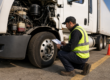
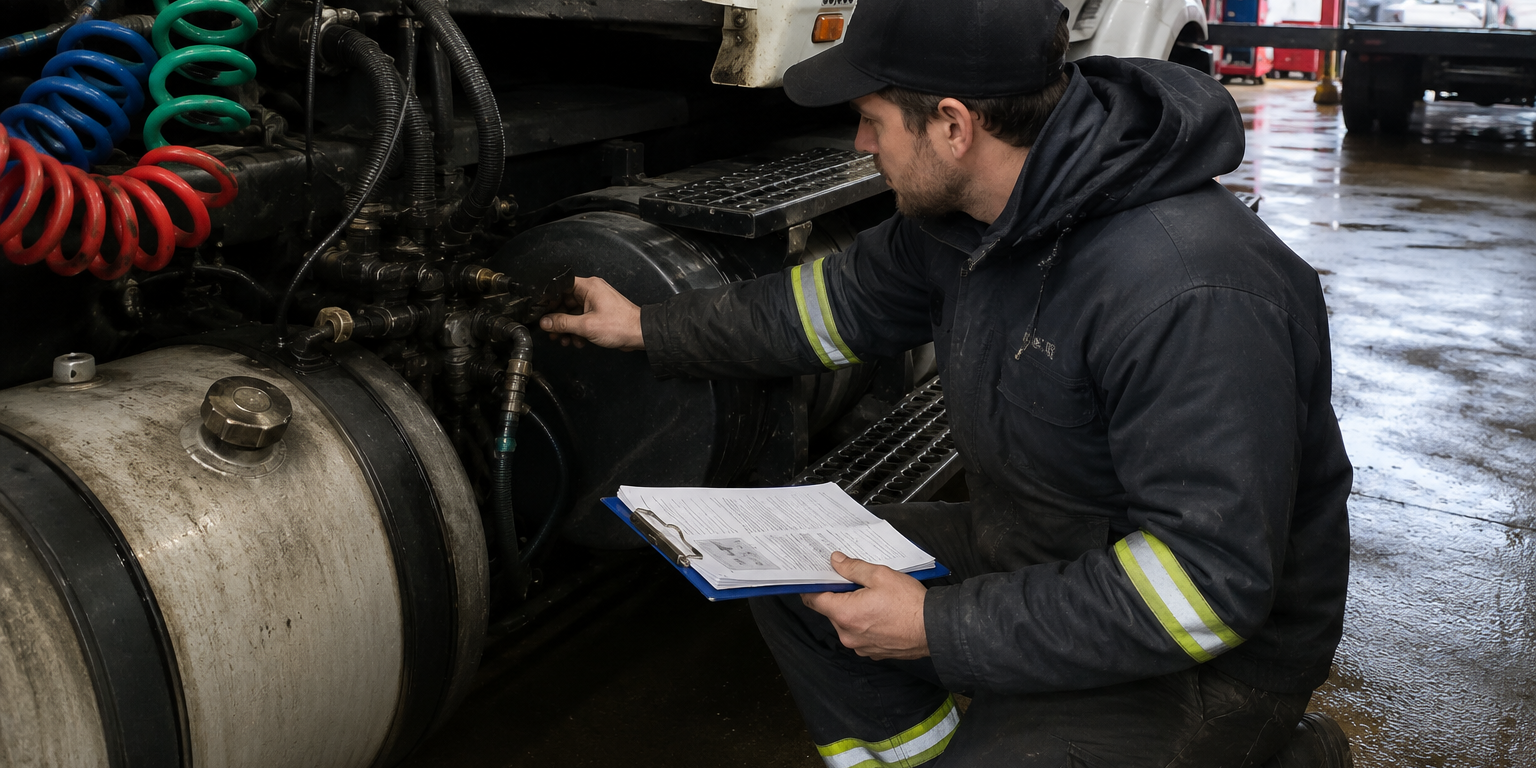
You’ll be expected to perform a complete air brake inspection while explaining every step confidently.
The examiner wants to see that you can:
- Build air pressure correctly
- Check warning systems
- Measure pressure loss
- Perform applied leak tests
- Complete spring brake checks
- Identify unsafe conditions
Common Mistakes That Students Make During An Air Brake Practical Test in BC
After speaking with a number of candidates and reviewing ICBC guidelines, the same mistakes appear repeatedly.
The biggest mistake includes:
- Students try to memorize everything instead of understanding the inspection.
- Forgetting pressure loss limits
- Rushing through pre-trip inspections
- Ignoring warning devices
- Practising only once before the test
- Depending only on online practice questions
One important thing that a lot of candidates miss out on is, if you fail the single-unit air brake knowledge test three times, you will have to additionally complete 7 hours of approved air brake theory training.
Career Opportunities After Air Brake Certification Canada
An air brake certification in Canada itself will not guarantee you a job, but it may help you unlock opportunities that are available in the market.
Common careers include:
- Transport truck driver
- Ready-mix truck operator
- Bus operator
- Waste collection driver
- Municipal fleet operator
- Construction haul truck driver
- Delivery fleet driver
- Heavy equipment support operator
According to Canada’s Job Bank, truck drivers that have air brake certifications in British Columbia commonly earn competitive wages that may vary by region, employer, experience and specialization.
Why a Professional Training in Air Brake Endorsement Gives You an Advantage
Sometimes experienced drivers may qualify for better job opportunities in certain situations. But most of the time employers prefer candidates who’ve completed structured training.
It can help you
- Build confidence before testing
- Practise real inspections
- Understand examiner expectations
- Reduce costly retests
- Learn industry-standard safety habits
For students that are entering commercial driving for the first time, learning this foundation can help you make the transition much smoother from
Final Thoughts On Starting Your Journey With Extreme Professional Driving Training
If you are someone who is serious about building a career in commercial transportation, earning your air brake certification in Canada can be your first step. It increases your employability and helps to show employers that you can legally and safely drive the vehicle.
At Extreme Professional Driver Training, students receive industry-focused instruction that is designed to prepare them for both the knowledge and practical exams. With experienced instructors, practical learning and a curriculum designed according to ICBC guidelines, here you are better prepared to earn your code 15 air brake in British Columbia.