

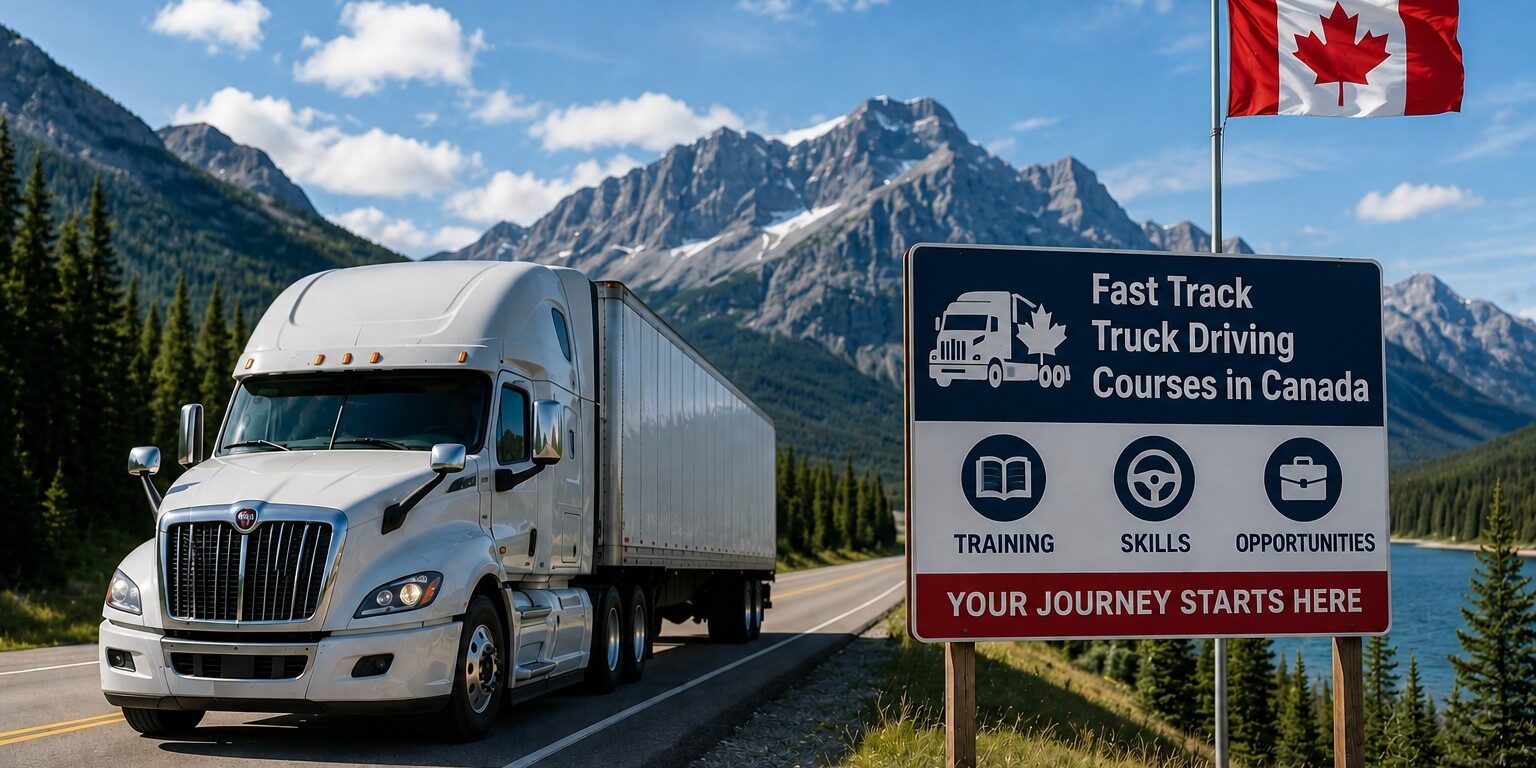
Not everyone enjoys sitting months in classrooms before starting a career, and this shift is one of the biggest reasons why accelerated programs are becoming popular across Canada. People want practical training, faster licensing, and a clear career path, especially in industries where demand already exists.
That’s where a fast truck driving course in Canada comes into the picture.
Instead of stretching over long weekends or multiple months, accelerated programs are comparatively shorter and more intense. For students who are planning to enter the transportation industry quickly, this route can be the best one for you.
But the real question is can these fast-track programs actually prepare students for real-world driving?
What Does A Fast-Track Truck Driving Program Actually Mean?
A fast-track program is basically an accelerated version of the heavy truck driving program. The goal of the program is simple to help candidates finish mandatory training hours, road practice, and licensing preparation within a shorter timeframe.
Most schools offering accelerated training combine:
- Classroom theory
- Air brake training
- Yard practice
- Highway driving
- Inspection training
- Road test preparation
In Canada, especially in British Columbia, students pursuing a Class 1 license must complete MELT (Mandatory Entry-Level Training). That means even accelerated programs need to meet provincial safety and training requirements.
Students searching for Class 1 driver training in Canada are usually looking for 3 things:
- Faster completion
- Job-ready practical experience
- Better access to trucking jobs after certification
How Long Does A Fast-Track Truck Driving Course Take?
The duration depends on structure, province, and licensing.
Most accelerated commercial driver training in BC programs can be completed within:
| Program Type | Typical Duration |
| Fast-Track Class 1 MELT | 3–6 weeks |
| Standard Truck Driving Program | 2–4 months |
| Weekend/Part-Time Training | 4–6 months |
Some schools like Extreme Pro Driver Training College offer evening or hybrid schedules, but full-time accelerator programs remain one of the quickest routes.
That pace works well for learners who:
- Prefer hands-on learning
- Want faster employment
- Can commit full-time
- Learn better through repetition and immersion
However, it may not be for learners who are already working or have some family responsibilities.
Why Are Accelerated Truck Driving Programs Growing In Canada?
Canada’s trucking industry continues to face driver shortages. According to Trucking HR Canada, the country could face tens of thousands of unfilled driver positions over the next few years.
That shortage has increased interest in quick CDL training in Canada to move students faster into the workforce.
Someone who was already working in retail, warehouse work, hospitality, or construction might not want to wait for six months in training before earning income again. Accelerated programs help to reduce that waiting time.
Fast-Track vs. Regular Truck Driving Programs
Not every student should choose an accelerated route. The better option also depends on learning style, availability, and confidence levels.
Let’s understand the comparison:
| Feature | Fast-Track Program | Regular Program |
| Completion Time | Faster | Slower |
| Schedule | Intensive full-time | Flexible |
| Learning Pace | Compressed | Gradual |
| Ideal For | Career switchers, full-time learners | Working Professionals |
| Cost | Similar or slightly higher | Standard |
| Driving Practice | Condensed daily training | Spread over weeks |
| Flexibility | Lower | Higher |
A well-structured heavy driving course can still provide strong practical experience even in a shorter timeline, especially when instructors heavily focus on real driving hours instead of classroom theory.
What Does A Fast-Track Course Usually Cost?
Tuition fees may vary depending upon the province and training school, the Extreme Pro Driver Training Program in Canada may cost you around $15,500.
Costs may include:
- MELT certification
- Air brake endorsement
- Classroom instruction
- Truck usage for road tests
- Practical driving sessions
- Documents, regulations, and planning
Some schools also provide financing options or payment plans.
Who Should Choose A Fast-Track Truck Driving Course
Accelerated training is usually best for students who already know that they want to enter the trucking industry quickly.
It works particularly well for:
- Career changers
- New immigrants
- Workers looking for stable demand industries
- Students comfortable with intensive learning
- Individuals who are looking for faster employment
However, students who are nervous at the beginning about driving large commercial vehicles may go for slow-paced courses.
Job Opportunities After Certification
Completing a commercial driver training in BC can open multiple career pathways beyond long-haul trucking.
Graduates may find opportunities in:
- Freight transportation
- Construction logistics
- Fuel delivery
- Industrial transport
- Regional distribution
- Cross-border trucking
- Equipment hauling
Students who are prioritizing accelerated pathways should go for programs like Extreme Pro’s B.C. Class 1 Mandatory Entry-Level Training (MELT) that offers industry-focused preparation.
Final Thoughts
A fast-track truck driving program is not the “easy shortcut” most people assume. The training is intensive, practical, and built for students who are ready to commit a few weeks and want quick employment in the trucking industry.
The important part is choosing a program that balances speed with proper road experience, safety training, and instructor support. You can also speak with our counselors at Extreme Pro to understand the learning pathway for your goals.