
Last year in winter when there was a storm and most part of the country was closed. Everything was paused. Flights were delayed, trains slowed down but within a day or two, essentials were still reaching stores. And this was not happening all by chance it was made possible through trucks
That’s the thing about trucking.
So whenever we talk about the future of Canada’s trucking industry in Canada, we’re really talking about something bigger than just trucks; a whole lot of the economy relies on this.
Importance of Trucking in Canada
Canada is a huge country. Places are far apart, a lot of industries are not even close to rails or ports, so in most cases the larger part of the job is done by trucks. It connects cities, towns and remote areas in a way that nothing else really can.
In fact, if you look at the number, close to 70% of freight in Canada moves by road. And this isn’t something trending, so it is growing; this is growing because it has to.
Food, building material, medical supplies, none of it can reach anywhere if trucks are not somewhere in the logistics.
Current State of the Trucking Industry in Canada
Right now, the industry is active, and there is no shortage of work. Let’s explore further the current state of the trucking industry.
Demand for Commercial Drivers:
The most debated issue is the availability of drivers. Trucking HR Canada estimates a shortage of more than 30,000 truck drivers by 2030, and honestly, this pressure has already started to show in day-to-day operations.
This growing truck driver demand in Canada is largely dependent on the workforce availability; many experienced drivers are approaching retirement, while compared to that, only a few younger workers are entering the field. Over time this gap is widening.
Supply Chain Importance:
If the last few years have taught you something it is that things break faster than you can imagine, and most of the time it is transport that is affected a lot. Trucking sits right in the middle of it. When trucks are delayed it is not only single delivery that is affected, multiple stores get affected, factories slow down as raw materials are not supplied.
You don’t even notice but things start getting affected too quickly. That’s why trucking isn’t just “logistics” anymore. It’s something the economy and businesses rely on.
Major Trends That Are Shaping the Trucking Industry
When you look at the trucking industry trends in Canada, it’s not really about big disruptions; it’s more about steady changes and adaptation.
The industry is being upgraded.
Automation and Smart Trucking
Though there is a lot of talk about self-driving cars and trucks, and it sounds interesting, the reality on the ground is more practical.
No doubt technology is becoming a bigger part of logistics, but it’s not taking over. Modern trucks are equipped with all the necessary systems that help a driver with lane control, collision alerts, and braking support. These smart technology features reduce driver fatigue, improve safety on longer routes. In a country with unpredictable weather, fully automation of trucking will have its own still limitations. So for now, technology is working alongside drivers, not instead of them.
Electric Trucks
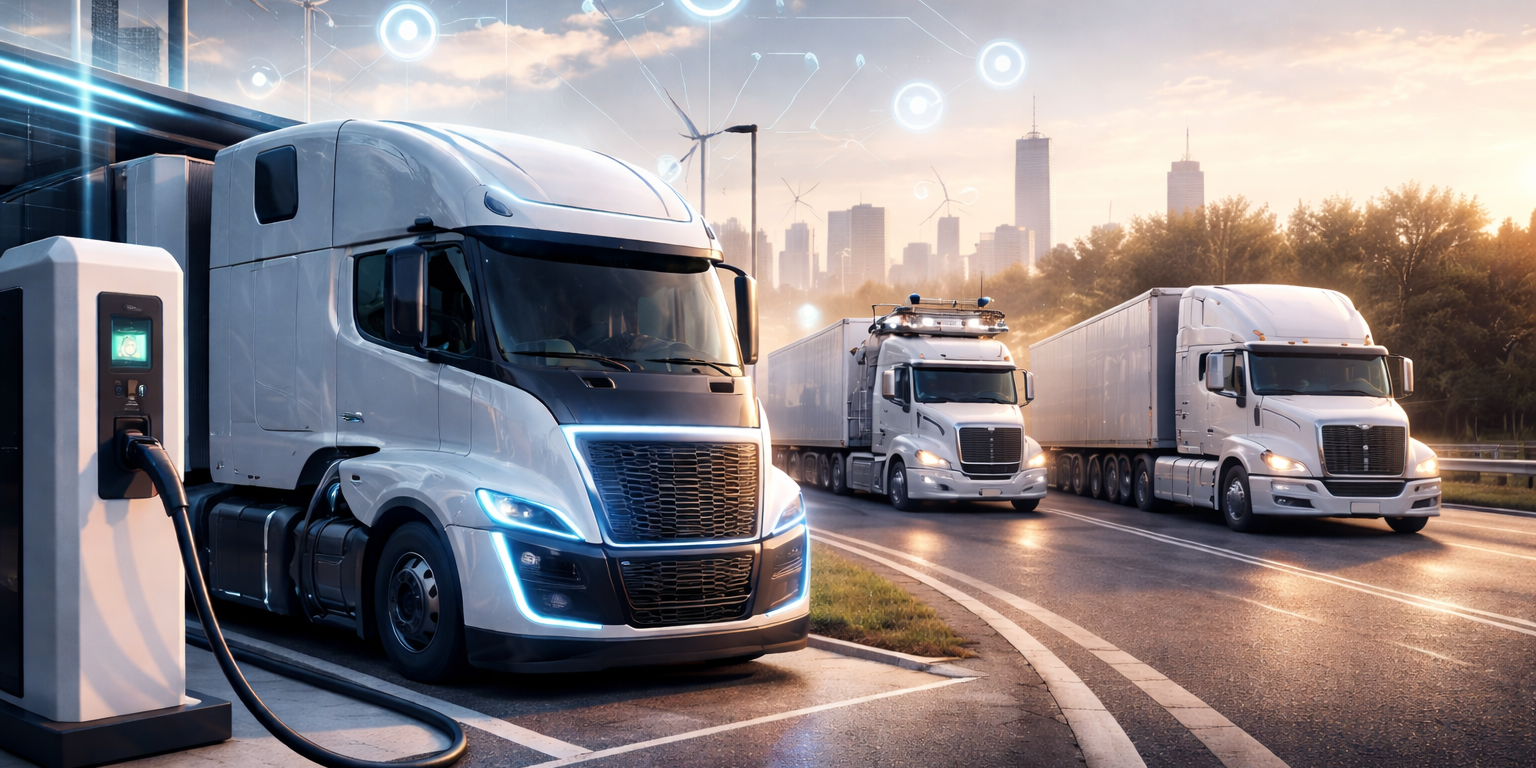
Electric vehicles have already started making their way. But it is not happening overnight.
On paper it looks good, lower running cost, reduced emissions, but when you look at how trucking actually works in Canada, it’s not that simple. Long-haul routes, long distances and there are not enough charging stations so the industry still depends heavily on diesel vehicles.
Diesel vs. Electric Trucks in Canada
| Factor | Diesel Trucks | Electric Trucks |
| Range | Long-distance capable | Limited for long-haul routes |
| Operating Cost | High due to fuel | Lower over time |
| Infrastructure | Widely available | Still developing |
| Maintenance | Higher engine wear | Lower maintenance needs |
| Emissions | High | Significantly lower |
Source: Natural Resources Canada
AI and Fleet Management:
Fleet operators are using AI to a larger extent, they are using it to plan better routes, keeping an eye on fuel efficiency, and even to predict small issues in trucks. It helps them save time, cuts unnecessary costs. And slowly, this kind of trucking technology in Canada, is changing how companies run their operations and stay ahead of each other.
Driver Shortage
If there is one thing that is shaping the industry, it is that there are not enough drivers. It is not just about how many people are missing; it is more about how many people are actually ready for the job.
Companies are not looking for someone who can drive the truck from point A to point B. They want people who can understand these large-haul trucks, a driver who understands how the vehicle works, how to handle safety checks, and what to do when something doesn’t go as planned.
So it is a good opportunity for learners who want to build a career and a more stable future in trucking jobs in Canada.
Opportunities for New Drivers
If you’re considering entering this field, the time is honestly in your favour. Not because it’s easy but because it’s is demand.
The demand is not just for drivers, but for those who are properly trained and road-ready. Employers are looking for professionally trained drivers and those who understand vehicle systems, safety protocols, and inspection procedures.
That is why a structured training program by an institute like Extreme Pro is extremely important if you want to crack the job with confidence, especially for beginners entering the industry.
Salary Structure of a Truck Driver
As demand rises, compensation is also improving. Let’s see the breakdown, how much is the average salary of a truck driver in Canada, with some senior and experienced drivers even earning higher wages.
| Experience Level | Average annual salary in CAD |
| Entry-level | 45,000 – 55,000 |
| Mid-level | 55,000 – 70,000 |
| Experienced | 70,000 – 85,000 |
Source: Government of Canada Job Bank
Conclusion:
The conversation around the future trucking jobs Canada often focuses on change as in automation, electric vehicles, AI. But when you look closely, the core remains the same.
The future of the trucking industry in Canada is not about replacement, it’s about evolution. Technology will continue to support operations, but human skill will remain the core backbone of this industry.
With the right training and understanding for new learners, trucking offers a clear, reliable career path.
That’s also why proper preparation matters. Institutes like Extreme Pro help new drivers build confidence in critical areas like air brake systems and safety checks skills that go beyond passing a test and actually prepare you for real-world driving.
FAQs
- What is the future of the trucking industry in Canada?
The industry is expected to grow steadily, supported by rising freight demand, technological advancements, and a continued need for skilled drivers.
- Is there a shortage of truck drivers in Canada?
Yes, Canada is projected to face a shortage of over 30,000 drivers by 2030, making it a high-demand profession.
- How is technology changing the trucking industry in Canada?
Technology is improving safety, route planning, and efficiency through smart systems and AI, rather than replacing drivers.
- Do I need formal training to become a truck driver in Canada?
Yes, proper training is essential. Programs like those offered by Extreme Pro help beginners develop practical skills, especially in areas like air brake systems and inspections.