
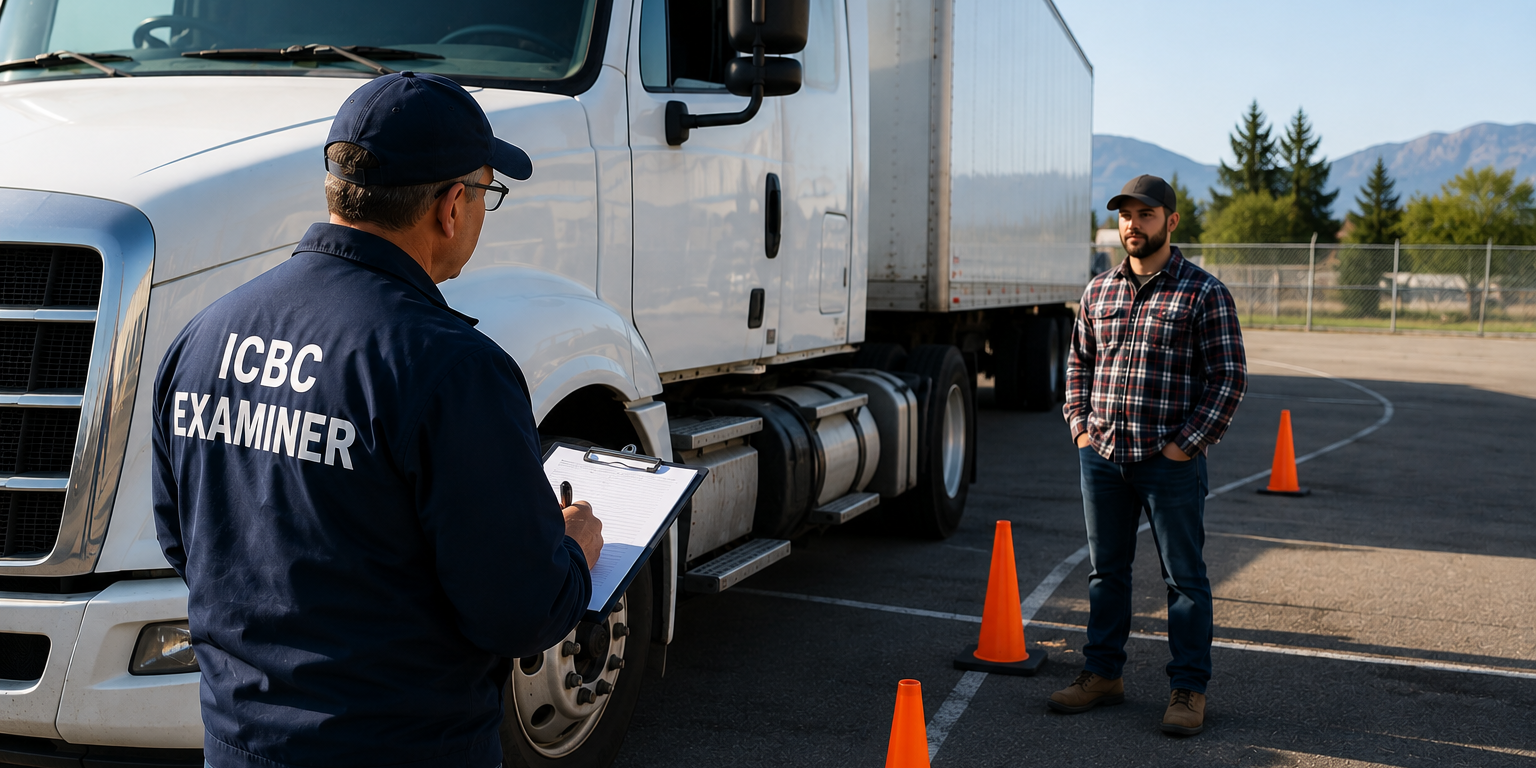
One interesting thing about the ICBC commercial road test is that the examiner already knows who can drive and who can not. So, they’re not looking to be impressed by your skills; they want an answer to a simple question:
“Would I trust this person with a 30,000 kg commercial vehicle on a busy BC highway?”
And this question changes how you prepare for an examination.
Most of the learners spend hours perfecting turns or memorising inspection steps. Yet on test day, they make several mistakes. A missed mirror check. A rushed air brake inspection. Turning too late.
Passing the commercial road test BC is less about doing extraordinary things and more about making safe decisions repeatedly even when you’re under pressure.
What the ICBC Commercial Road Test Is Actually Measuring
A common misconception is that the road test measures driving ability alone.
It doesn’t.
The examiner is evaluating whether your habits are reliable enough for commercial driving and where every decision of yours affects public safety.
| Test Area | What the Examiner Wants to See |
| Pre-trip inspection | You understand the vehicle and not just a checklist |
| Air brake check | Correct sequence without hesitation |
| Backing | Patience, mirror use, and controlled corrections |
| Lane positioning | Planning instead of reacting |
| Intersections | Observation before movement |
| Overall driving | Calm, predictable decision-making |
- Turn Your Pre-Trip Inspection Into a Routine, Not a Memory Test
During the truck driving road test in BC, many candidates forget inspection items because they’re trying to remember a script.
Professional drivers don’t learn scripts; they follow routines. Consistency is far easier to trust than memorization.
- Air Brake Checks Should Feel Automatic
Few parts of the commercial driving test in Canada expose nervousness faster than the air brake inspection.
Practice until every step feels natural. When you’re no longer thinking about the sequence, you’ll have more mental space to stay calm.
-
Back Slowly Enough That You Rarely Need Big Corrections
One of the best Class 1 road test tips is surprisingly simple: that is, if you drive slowly enough, then mistakes never become large.
Backing does not mean finishing quickly. It’s about showing control, stopping when needed, and using your mirrors before making adjustments.
- Lane Positioning Starts Long Before the Turn
Strong commercial drivers prepare early. Good lane positioning can’t be fixed at the intersection; it is something you establish several seconds before you reach it.
Early planning makes every turn smoother and safer.
- Make Your Observation Obvious
Examiners cannot award marks for checks they don’t see.
Mirror scans, shoulder checks, and intersection observations should be obvious enough and look exaggerated.
- Stay Predictable, Not Perfect
Many first-time candidates drive differently because they’re being tested.
Ironically, trying too hard often creates unnecessary mistakes.
Smooth acceleration, gradual braking, and steady steering usually score better than dramatic attempts to drive “perfectly.”
- Your Final Practice Should Feel Like the Real Test
Instead of jumping on any new lesson just a night before the exam, practise one complete mock test from start to finish.
Complete the pre-trip inspection, air brake checks, backing exercise, and road drive exactly as you would on exam day. Building that rhythm often boosts confidence more than learning one extra technique.
Common Reasons Candidates Don’t Pass the Commercial Road Test in BC
Most unsuccessful tests come down to repeated habits rather than one major error.
| Avoidable Mistakes | Why They Matter |
| Skipping inspection items | Suggests inconsistent safety habits |
| Incomplete air brake checks | Critical safety concern |
| Poor lane positioning | Shows weak planning |
| Missing shoulder checks | Observation marks lost |
| Rushing back maneuvres | Reduced vehicle control |
| Late decision-making | Creates unnecessary risk |
Final Thoughts: Train the Way You Will Be Tested
The best commercial drivers don’t try to impress examiners; they make every decision that is easy to trust.
At Extreme Professional Driver Training, students preparing for their ICBC commercial road test practice are supposed to complete testing scenarios, including pre-trip inspections, backing exercises, air brake procedures, and real road conditions.
So whether you’re earning your Class 1, Class 2, or Class 3 license, a structured practice would help you gain confidence.
If you approach your commercial road test in BC with the right mindset, you will not only improve your chances of passing on the first attempt but also develop the habits that matter in your long-term career goals.