
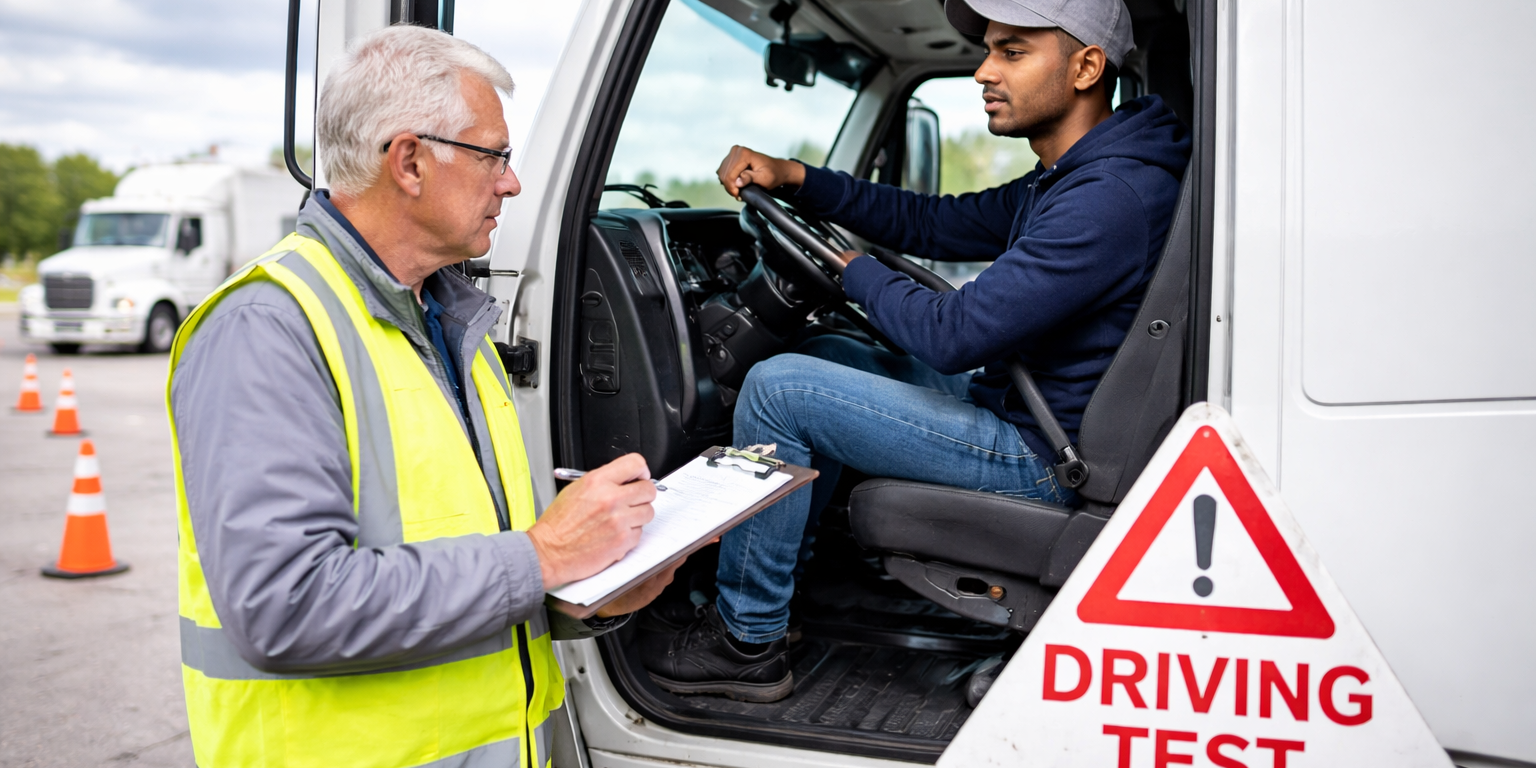
You never knew, but passing a Class 1 road test in Canada is a big milestone. It’s a joyous moment when you move from being a student to someone who is trusted to operate heavy commercial vehicles on public roads. But here’s the reality: a lot of candidates fail in their first attempt not because they cannot drive but because they miss small details that examiners take very seriously.
In fact, data from the Insurance Corporation of British Columbia shows that commercial driving license tests are unsuccessful on the first try because of observation mistakes, lane control issues, and improper vehicle handling.
But the best part is most of these mistakes are completely avoidable once you know what the examiners are looking for.
Why passing the Class 1 road test matters?
A class 1 license allows you to operate tractor-trailers and heavy commercial vehicles across Canada. This allows you to access long-haul freight, cross-province logistics, and some of the highest-paying entry roles in the truck industry in Canada.
According to the sources suggested by the Canadian Trucking Alliance, Canada faces a shortage of 30,000 skilled truck drivers, and this gap can widen because older drivers are retiring steadily. Salary and compensation are another reason why people want to pursue a career as a truck driver in Canada. Salary data from Job Bank Canada shows the long-haul truck drivers in Canada typically range from CAD $55,000 to $85,000, and an experienced driver can even earn more depending on the level of experience, freight, and route.
So yes, the opportunity for class 1 licensed drivers is read but what makes it challenging is class 1 road test, many beginners stumble here.
Common mistakes students make during the Class 1 road test
Let’s talk about some common mistakes examiners see every day by class 1 road test learners:
Poor mirror usage
Driving a tractor-trailer without proper mirror checks is equal to flying a plane without proper instruments. You can’t simply rely on guesswork. Students either use mirrors too rarely or too often. Examiners want to see students active on mirror scanning, especially before slowing, turning, or changing lanes.
If you’re not actively checking mirrors, the examiner assumes you are not active about traffic.
Incorrect Lane Positioning
Lane positioning is one of the most common class 1 road test mistakes in Canada.
Many new drivers either hug the shoulder too closely or drift towards the center line. With a large truck, that can create dangerous space issues for surrounding vehicles.
Turning Techniques
Turning a tractor-trailer is not like turning a car. Students often start their turn too early or too tight, which risks clipping curbs or entering adjacent lanes. A good rule is to slow down, set up wide, and watch your mirrors during the turn.
Not checking blind spots
Blind spots are huge on commercial trucks. Missing even one shoulder can result in an immediate mark against you. Many examiners specifically watch for the following:
- Shoulder checks before lane charges
- Observation during turns
- Awareness of pedestrians and cyclists
These observations are the most common CDL road test mistakes worldwide, not just in Canada.
Weak Backing Skills
Backing is where nerves show up.
Straight backing, offset backing, or alley docking requires patience and mirror discipline. Students often rush the maneuver because they feel the examiner watching.
Common Class 1 Road Test Mistakes vs. Correct Driving
| Driving skills | Common Student Mistake | What Examiners Expect |
| Mirror checks | Checking mirrors rarely | Frequent mirror scans and traffic awareness |
| Lane positioning | Drifting too close to the shoulder | Stable lane control in the center |
| Turning technique | Turning too early or tight | Wide controlled turns with trailer awareness |
| Blind spots check | Missing shoulder checks | Clear observation before lane charges |
| Backing | Rushing the maneuver | Slow and controlled backing |
Source: Insurance Corporation of British Columbia.
What Examiners Actually Look for
Many candidates might wonder if the test is regarding perfection, but it’s not like that. Examiners mainly want to see 3 things:
- Safety Awareness: Are you watching traffic constantly? Do you pay attention to hazards before they become problems? That awareness matters more than flashy driving.
- Vehicle Control: Smooth braking, stable steering, and proper speed control show that you are comfortable with a heavy vehicle.
- Proper signaling and observation: Signaling early and checking mirrors tell the examiner one thing: that you are thinking ahead. Professional drivers always plan their next move early.
Tips to Pass the Class 1 Road Test
Let’s talk about actual tips that help students succeed in the Class 1 road test:
- Practice Defensive Driving: Think of defensive driving like this: you are not just driving a truck; you are also trying to predict what everyone on the road is trying to do next. A car might suddenly cut in front of you, a pedestrian could step onto the road without looking, and cyclists can appear from blind spots. During the test, the examiner isn’t just watching how you react; they are watching if you are prepared for these types of situations.
- Master the pre-trip inspection: Many students underestimate this part. A proper pre-trip inspection shows you understand the vehicle’s mechanical safety. This includes air brake checks, tire inspection, lights and signals, and trailer connections.
- Stay calm during the exam: Most failures happen because people panic. They rush turns. They forget mirrors. They overthink simple maneuvers. The best drivers treat the test like a normal drive.
According to the reports suggested by Transport Canada, vehicle inspections are one of the most crucial responsibilities of commercial drivers because mechanical failures are a major cause of heavy vehicle accidents.
Conclusion
Passing a Class 1 road test in Canada is not about being perfect. It’s about showing that you are safe, aware, and able to control heavy vehicles. Most failures come down to a handful of predictable issues like minor usage, observation mistakes, poor turning setup, or nervous backing.
Programs like Extreme Pro’s Class 1 Mandatory Entry-level Training (MELT) aren’t just theoretical courses for you. They actually walk you through the whole journey step by step. You spend time in the yard getting comfortable, then slowly move on to real roads. classroom theory with real driving practice, covering essential topics like pre-trip inspections, air brake checks, load securement, and hours of service regulations.
Students learn how to handle manual non-synchronized trucks and practice their turning and observation skills in real traffic conditions, the real traffic you will face every day. By the time students reach their ICBC Class 1 road test, they’ve already practiced the exact skills examiners expect. And that preparation often makes the difference between failing once and passing on the first attempt.